


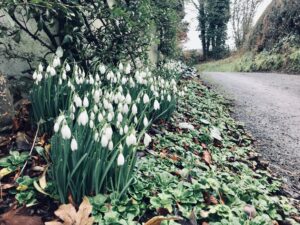
Summer flowers on the Shropshire Way
The year begins with drifts of Snowdrops, followed by wood anemone especially in the Wilderley area. The hedgerows become a billowing mass of Cow Parsley underlayed by greater Stitchwort, the Hawthorn blossom quickly follows the Cherry and Sloe. Later in the year Bluebells, early Purple Orchid and Purple Loosestrife are evident. July, August sees the Harebell, Toadflax, Knapweed and Sheep’s bit.
If not a botanists paradise, it is worth keeping an eye open for the unusual.
Mammals
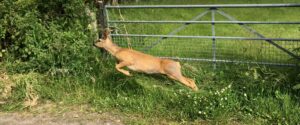
Roe Deer may be surprised either singularly or in small groups. They tend to spend the day in the shelter of wooded areas, feeding in the fields at night. One can only marvel at their jumping ability, a fence is a mere hop.
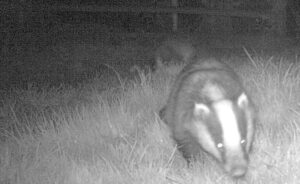
Badgers and foxes are very common, a charming sight is a fox loosely curled up in the middle of the field sun bathing, unfortunately when they have demanding youngsters they visit the areas hen houses and show ingenuity at breaking in and killing the fowl.
We are fortunate enough to have a thriving population of Hedgehogs in Picklescott gardens, again usually seen at dusk.
The magical Hare can be seen anywhere in the Parish although the road up to Thresholds is the most usual, particularly in June and July when the young are beginning to explore the world.
Birds
The mixed habitat is home to a number of bird species, from large numbers of House Sparrows to the scarce Hen Harrier. The latter is usually in the area in December although in 2020 a male was seen in July, to watch them hunting is one of the natural worlds delights.
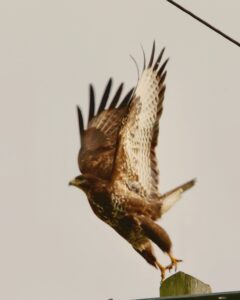
Other raptors to look out for are Buzzards, Kites (do take the time to watch their sinuous movement and the beautiful chestnut plumage), Ravens, Crows, flocks of Rooks and the cheeky Jackdaw. The rare Kestrel my be observed hovering, Sparrow Hawks are in the hedges and woods and there are reports of the Goshawk.
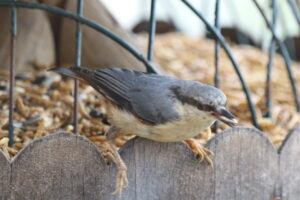
Even in January the Sky Lark can be heard in the fields opposite Thresholds, a sound to lift the spirits and the Mistle Thrush begins calling at dawn. Its cousins, Field Fares and Redwings are in flocks feeding on the pasture land, and hedges that still have berries, listen out for the rough squeaky chat.. Another joy of the winter especially on the tops, is The Golden Plover, the sight of a flock catching the sun as they wheel against a blue sky is spell binding. The hedges, copses and Alders along the streams, invite a scan with the binoculars, for Tree Creepers, Nuthatch, Siskins, Finches which include the retiring Bull Finch and the charming Gold Finch. The Tits are present all year, Marsh Tits can be found in damp areas especially if Willows are present. Flocks of Long Tailed Tits talking in their high squeaky voices always encourages one to stop to listen and watch.
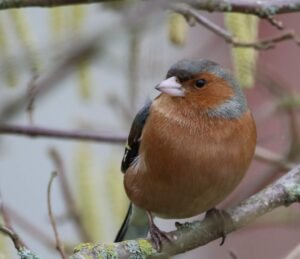
Chaffinch
The commonest British land bird, is often in the area. Early spring brings the Curlew and Lapwing, unfortunately both in decreasing numbers. Lapwing followed by the Cuckoo, Swallow, House Martin and Swifts along with many different Warblers known at LBJs (Little Brown Jobs). The Short Eared Owl is a spring and autumn rarity.
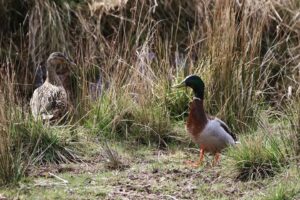
Mallard
The pools are at their best in winter with Mallards, Teal and Widgeon, Goosanders overwinter on one pool, the males in their white bodies, dark heads and hooked beaks, arrive first.
The above are just a few of the many species to be watched in the Parishes, Venus Pool and other sites in the county and over the border in Wales have a denser concentration of birds and are worth putting on the to do list.